How to Stop AI Assistants Responding to TV Ads?
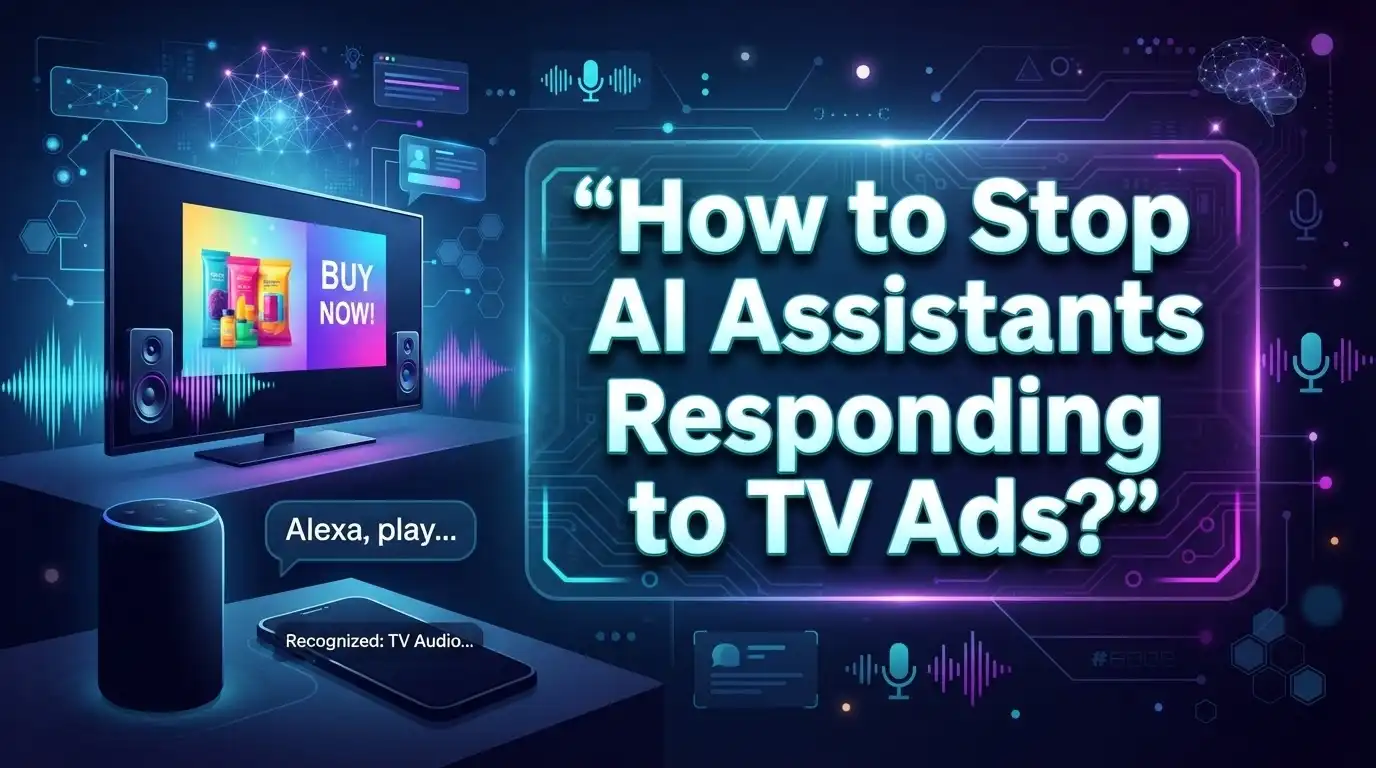
Have you ever watched TV and heard Alexa suddenly wake up? Your smart speaker hears a commercial and thinks someone called its name. Then it starts talking back to your television.
This happens more often than you think. TV ads use words like “Alexa” or “Hey Google” to grab attention. Your AI assistant cannot tell the difference between a real command and a scripted ad.
This mix-up can cause funny moments or real headaches. Your device might order random items or answer random questions. It might even blast music at random times.
The good news is you can fix this problem. This guide will show you simple steps to stop your AI assistant from listening to TV ads.
By the end of this article, you will know exactly how to keep your smart home devices focused on you and not your television. Let’s get your AI assistant back under control.
In a Nutshell
- Wake word confusion happens when TV ads use words that sound like “Alexa” or other assistant names. Your device cannot tell the difference between a real person and a television speaker.
- Adjust device sensitivity in your assistant’s app settings. Lowering the sensitivity helps your device ignore distant or unclear sounds from the TV.
- Turn off unnecessary AI features on your phone or smart speaker. This includes disabling AI tracking on Android devices through your privacy settings.
- Check your ad preferences on platforms like Facebook and Instagram. You can opt out of AI ad targeting to reduce unwanted triggers.
- Disable Meta AI across Facebook, Instagram, and WhatsApp if you do not use these features. This stops extra listening activity in the background.
- Review your privacy settings regularly. Many people leave AI tracking on by default without realizing it.
Why TV Ads Trigger AI Assistants
Your TV commercials contain words and sounds that confuse your smart devices. When an ad plays, your voice assistant hears something that sounds like its wake word and springs to life.
Why does this happen? Voice assistants listen constantly for their activation words. Alexa, Google Assistant, and Siri all monitor your environment. They wait for you to say their names. TV ads sometimes use these exact words or very similar sounds. Your device cannot tell the difference between the TV speaker and your voice.
The problem gets worse with background noise. A busy commercial with lots of talking and sound effects creates confusion. Your assistant picks up fragments that resemble wake words. It then tries to execute commands from the ad. You might see random purchases, strange responses, or your device playing music unexpectedly.
Another layer of the issue involves AI tracking. Platforms collect data about what you watch and listen to. This information helps advertisers target you better. Your devices may respond to ads because they have been trained to recognize patterns in your viewing habits. The AI learns what catches your attention.
Sound frequency matters too. Some commercials use high pitched sounds or specific audio tones. These frequencies can trigger voice assistants more easily than regular speech. Dogs barking in ads, bells ringing, or alarm sounds sometimes activate devices.
Your smart home setup also plays a role. If you have multiple devices in one room, they compete to respond first. Several speakers hearing the same TV ad can create a cascade of unwanted activations.
Understanding these causes helps you take action. The issue stems from how voice assistants work, not from any fault in your usage. Your devices are doing exactly what they were designed to do. They listen for their names and respond to commands. The challenge is teaching them to ignore your television.
Identifying Which Devices Are Responding
Finding which devices respond to your TV ads is the first step toward fixing the problem. Start by watching your TV with all smart devices in the room powered on. Pay close attention to which speakers light up or make sounds when commercials play.
Keep a simple list of every device that reacts. Write down the exact time and which ad triggered the response. Note if the device name appears on screen or if you hear an audio cue. This helps you identify patterns in what activates your assistants.
Check your device’s activity log next. Most voice assistants store a record of when they were activated and what commands they heard. Open your assistant app and look for an activity or history section. You will see timestamps showing exactly when each device responded to your TV.
Look for common triggers in those logs. Do certain words appear repeatedly? Does your device activate during specific commercial breaks? This information tells you whether the problem is widespread or limited to certain ads.
Test each device individually in different rooms. Move one speaker closer to your TV, then farther away. Notice at what distance it stops responding to commercials. Some devices have better audio filtering than others, so this test reveals which ones are most sensitive.
Check if multiple devices respond at the same time or just one. Simultaneous responses suggest your TV volume is loud enough to trigger all nearby assistants. Single device responses might mean that specific speaker has higher sensitivity settings.
Document everything you find. Create a simple chart showing device name, location, and how often it responds. This information becomes valuable when you adjust settings. You will know exactly which devices need sensitivity changes or whether certain features require disabling.
Step-by-Step: Adjusting Alexa and Echo Settings
Your Alexa or Echo device has built in settings that help reduce unwanted responses to TV commercials. These adjustments are straightforward and take just a few minutes to complete.
Start by opening the Alexa app on your smartphone or tablet. Look for the “Devices” tab at the bottom of the screen. Select your specific Echo or Alexa device from the list of connected gadgets.
Tap on the gear icon to access device settings. You will see a section labeled “Microphone Sensitivity” or “Wake Word Sensitivity.” This controls how easily your device picks up sounds from your environment, including TV ads.
Lower the sensitivity level to make your device less responsive to background noise and distant voices. A lower setting means the device requires a clearer, closer activation word before it responds. This simple change stops many accidental TV ad triggers.
Next, look for “Do Not Disturb” settings within the same menu. You can schedule specific times when your device will not respond to commands or activate. Set these hours to match your typical TV watching time if ads bother you most during certain shows.
Check the “Sounds” section in your device settings. Disable notification sounds if they are unnecessary. This prevents your device from making sounds when it accidentally activates from TV content.
Review your “Communication” settings and disable features you do not actively use. Fewer active features mean fewer ways your device can respond to unwanted triggers.
Test your changes by playing a commercial on your TV and observing if your device still responds. If problems continue, lower the sensitivity further or enable Do Not Disturb during those hours.
These adjustments put you in control. Your Echo device will focus on your direct commands instead of reacting to every sound from your television.
Step-by-Step: Turning Off Meta AI Across Facebook, Instagram, and WhatsApp
Meta AI appears across Facebook, Instagram, and WhatsApp by default. You can turn it off through your account settings on each platform.
Start with Facebook first. Open the app and go to Settings and Privacy. Tap Settings. Look for the AI section in your menu options. You will see Meta AI listed there. Select it and choose the option to turn off or disable Meta AI features. This stops the AI assistant from responding to your interactions on Facebook.
Instagram requires similar steps. Open Instagram and go to your profile. Tap the menu icon (three horizontal lines). Select Settings and Privacy. Find the AI section just like you did on Facebook. Toggle off Meta AI to disable it completely. Instagram will stop suggesting AI powered responses and features.
WhatsApp has its own process. Open WhatsApp and go to Settings. Look for Account or Privacy options. Find the AI or Meta AI section. Disable it by selecting the appropriate toggle or option. This prevents AI from analyzing your messages or suggesting responses.
Verify your changes worked. After disabling Meta AI on all three platforms, check back after a few days. Look for any AI suggestions or responses appearing in your feed or chats. If they still show up, repeat the steps to ensure you disabled all AI features.
Check your ad preferences too. Even with Meta AI turned off, the platform still tracks your activity for ads. Go to Ad Preferences in your settings. Review which categories Facebook and Instagram use to target you. You can remove interests or opt out of certain tracking here.
Keep your apps updated. Meta regularly changes where these settings appear. Update Facebook, Instagram, and WhatsApp to their latest versions. This ensures you access the current settings menus. Older app versions may have different layouts that make these options harder to find.
Managing AI Tracking and Ad Preferences on Android Devices
Android devices collect data about your interests and behavior. This information helps advertisers target you with personalized ads. When your AI assistant responds to TV commercials, it often happens because tracking is enabled on your phone.
Disable ad tracking on your Android device by opening your phone’s Settings app. Look for the “Google” section or search for “Ads” directly. You’ll find an option called “Ads” or “Ad ID” in the Google settings menu. Tap on it and select “Reset advertising ID” first. This clears your current ad profile.
Next, find the toggle for “Opt out of Ads Personalization” and turn it on. This tells Google and other advertisers to stop using your data for targeted ads. Your device will still show ads, but they won’t be based on your personal information and behavior.
Check your app permissions too. Go to Settings, then Apps or Application Manager. Look for your voice assistant app and review what permissions it has. Disable microphone access when you’re not actively using the assistant. This prevents it from listening to TV commercials in the background.
Review your Google account settings separately from your phone. Visit your Google Account page on a web browser. Go to the “Data and Privacy” section and look for “My Ad Center.” Here you can see what topics Google thinks interest you. Remove categories that aren’t accurate or that you don’t want tracked.
Finally, check notification settings for your AI assistant. Disable notifications that allow the app to activate without your direct input. These small changes work together to significantly reduce unwanted responses to TV ads on your Android device.
Common Mistakes That Leave Assistants Vulnerable to TV Triggers
Many people accidentally leave their AI assistants vulnerable to TV ad triggers. Understanding these common mistakes helps you fix the problem quickly.
The biggest mistake is ignoring default settings. Most voice assistants come with standard configurations that make them highly responsive. You receive these devices and never adjust sensitivity levels. This means your assistant listens just as carefully to TV commercials as it does to your direct commands. The fix requires you to actively change these settings yourself.
Another frequent error involves not checking privacy settings across all platforms. People disable features on one app but forget about others. For example, you might turn off Meta AI on Facebook but leave it active on Instagram and WhatsApp. Each platform operates separately, so you must visit each one individually. Skipping this step leaves gaps in your protection.
Many users also fail to review ad preference settings. Even after disabling AI features, platforms continue tracking your behavior for advertising purposes. This tracking can still influence what your device responds to. You need to access your account settings and adjust ad preferences specifically. This step gets overlooked because people assume disabling AI covers everything.
Device sensitivity remains a major overlooked issue. Your assistant’s microphone picks up every sound in your room. TV commercials use voice commands and wake words intentionally. High sensitivity settings make your device respond to these broadcasts instantly. Lowering sensitivity reduces false triggers significantly.
Finally, people forget to test their changes. You adjust settings but never verify they work. Testing involves playing a commercial and watching your device’s response. This simple step confirms your adjustments actually solved the problem. Without testing, you might think you fixed the issue when problems still exist.
These mistakes are easy to make because the solutions require multiple steps across different apps and devices. Taking time to address each area properly prevents ongoing frustration.
Troubleshooting Persistent Voice Assistant Activations
When your voice assistant keeps responding to TV commercials, you need to troubleshoot the problem systematically. The issue usually stems from your device’s sensitivity settings or how your assistant recognizes wake words.
Start by checking your device’s microphone sensitivity. Most voice assistants let you adjust how easily they pick up sounds. Lower sensitivity means the device responds only to commands spoken directly to it, not to voices coming from your TV speaker. Access this through your device’s companion app in the settings menu.
Next, examine your device placement. Voice assistants positioned too close to your television pick up audio more easily. Try moving your device farther away from the TV or to a different room. This simple physical change often reduces accidental activations significantly.
Check if your device has a “Do Not Disturb” mode. You can schedule times when your assistant ignores commands. This works well if TV ads trigger your device during specific hours when you’re watching shows.
Review your device’s activity history. Most assistants show you recent commands they’ve processed. Look through this list to see which TV ads caused activations. This helps you understand the trigger words your device is picking up.
Test your microphone itself. Sometimes a dirty or malfunctioning microphone causes false activations. Clean the microphone gently with a dry cloth. If problems persist, your microphone might need replacement.
Update your device software regularly. Manufacturers release updates that improve voice recognition accuracy and reduce false triggers. Check for available updates in your device settings.
Finally, contact your device manufacturer’s support team if problems continue. They can help you adjust advanced settings or determine if your device has a hardware issue. Provide them with specific examples of which ads trigger your device, as this information helps them diagnose the problem faster.
Final Thoughts
TV ads triggering your AI assistant is a common problem. But it’s not something you have to live with.
Small changes to your settings make a big difference. You can adjust device sensitivity and review privacy controls. These steps stop most unwanted activations.
Remember, this issue affects many households with smart devices. You’re not alone in dealing with random Alexa responses during commercial breaks.
The key is consistency. Check your settings on Meta platforms and Android devices regularly. Companies update their systems often, so your controls might shift over time.
Start with one device first. Test the changes before moving to another gadget. This helps you understand what actually works for your setup.
Voice assistants listen for wake words all the time. TV ads sometimes use these words by accident. That’s why your device responds even when no one asked it to.
Turning off AI tracking and adjusting ad preferences reduces false triggers. It also protects your privacy from unnecessary data collection.
Don’t forget to update your apps and devices. Manufacturers fix these bugs through software updates. Skipping updates leaves old problems unsolved.
If TV ads still trigger your assistant after trying these fixes, contact support. Device makers can offer specific solutions for your model.
Patience matters here. Some fixes take effect immediately. Others need a few days to fully work across all your connected apps.
Take control of your smart home step by step. Review each platform’s settings one at a time. This makes the whole process less overwhelming.
Your AI assistant should work for you, not against you. With the right settings in place, TV commercials won’t interrupt your daily routine anymore.
Stay proactive about checking these settings every few months. Technology changes fast, and staying informed keeps your devices working correctly.
Frequently Asked Questions
Why does my voice assistant respond to TV commercials?
Voice assistants listen for wake words constantly. When a TV ad or show contains a wake word like “Alexa” or “Hey Google,” your device thinks you gave a command. This happens because your microphone picks up the broadcast sound. The assistant then executes whatever words follow the wake word.
Can I reduce false activations without turning off my device?
Yes. You can adjust your device’s microphone sensitivity in the settings menu. Lower sensitivity means your assistant requires a louder, clearer voice command to activate. You can also enable “Do Not Disturb” mode during specific times when you watch TV. This prevents your device from responding to any triggers temporarily.
What privacy settings should I check to stop ad related triggers?
Visit your account settings on the platform connected to your assistant. Look for ad preferences and tracking options. Disable personalized ad tracking if available. Turn off data collection features in your privacy settings. These adjustments limit how much information your device collects, which can reduce unwanted activations tied to targeted advertising.
Should I disable AI features on social media platforms?
If you use Meta AI, Facebook, Instagram, or WhatsApp, check those platform settings separately. You can turn off AI features in your account preferences. This prevents cross platform data sharing that might influence your device behavior. Each platform has its own privacy controls, so review them individually.
What should I do if the problem continues after adjusting settings?
Contact your device manufacturer’s support team directly. They can help troubleshoot persistent issues and may suggest additional configuration options. Keep your device software updated, as manufacturers release improvements to voice recognition accuracy regularly. Provide them with specific details about when and how the false activations occur.

Hi, I’m Simmy — the founder and voice behind AI Gadgets Insight. I’m a tech enthusiast who loves exploring the latest AI gadgets, smart devices, and innovative tech products. I started this blog to help people make smarter tech choices with honest reviews, easy-to-follow comparisons, and practical buying guides.