Why Does My AI Pin Battery Drain So Fast?
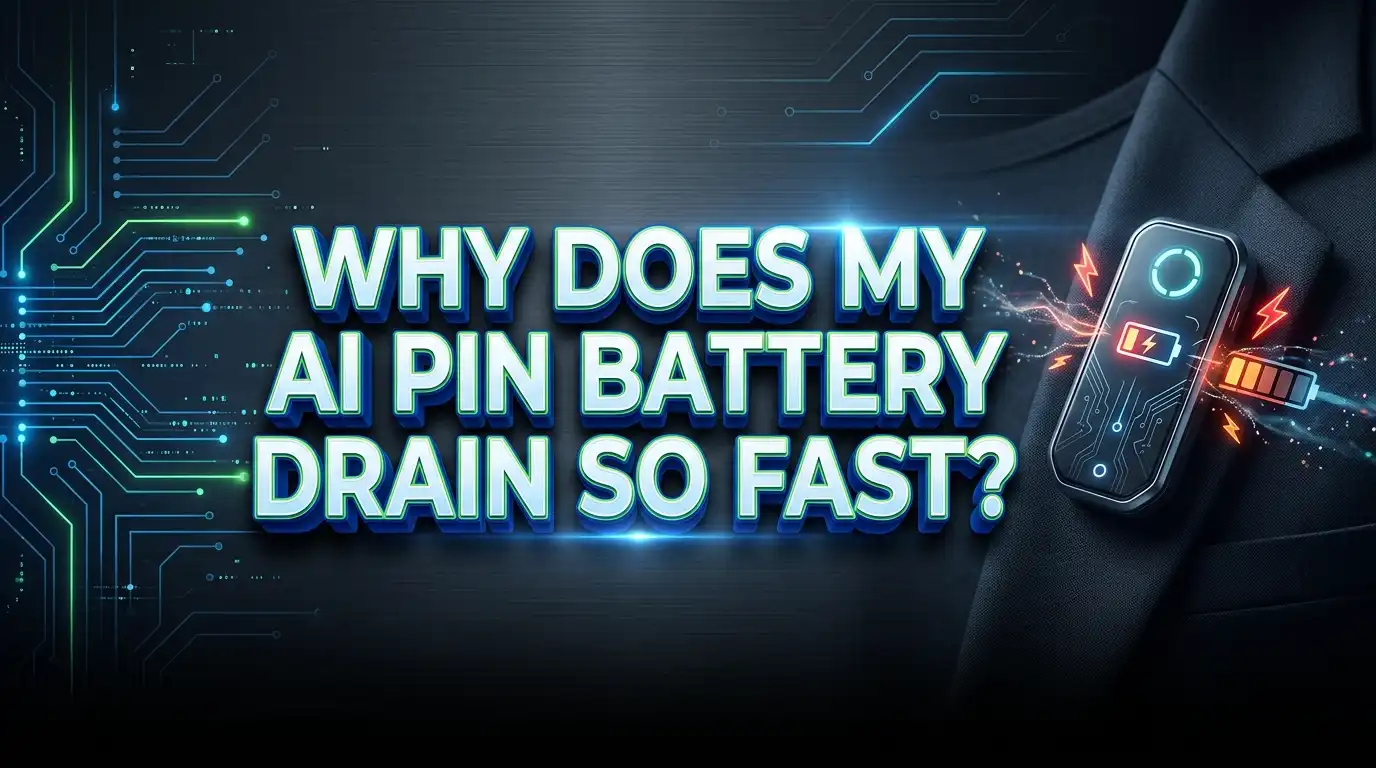
You clipped on your AI Pin this morning, and by lunch, the battery was nearly dead. Sound familiar? You are not alone. Fast battery drain is one of the most common complaints among AI Pin users, and it has frustrated owners since the very first day these wearable devices hit the market.
The AI Pin’s internal battery lasts roughly four hours under normal use, and even with a battery booster attached, many users report falling short of a full day.
The good news? Several practical fixes can stretch your AI Pin’s battery life significantly. Some are quick setting changes. Others involve smarter charging habits. A few require a small shift in how you use the device throughout the day.
This post breaks down every major reason your AI Pin battery drains so fast and gives you clear, step by step solutions you can apply right now.
In a Nutshell
- The AI Pin’s built in battery is small by design. It holds enough charge for about four hours of active use. A magnetic battery booster extends this to roughly nine hours, but heavy use can shorten that window fast.
- Cellular connectivity is a major power drain. The AI Pin relies on its own mobile data connection, which pulls significant energy from the battery every second it searches for or maintains a signal.
- Overheating causes the device to consume even more power. When the AI Pin gets too warm from extended use or direct sunlight, internal processes work harder to manage temperature, and that eats into your remaining charge.
- Background AI processing runs constantly. The device listens for wake commands and processes data in real time. This always on functionality is a core feature, but it also means the battery never truly rests while the Pin is active.
- Proper charging habits and booster rotation can add hours to your day. Keeping both boosters fully charged, swapping them on schedule, and using the desk charger correctly are simple steps that make a big difference in daily battery performance.
- Firmware updates occasionally improve power efficiency. Staying current on software can patch battery related bugs and optimize how the device manages its limited energy supply.
How the AI Pin Battery System Works
The AI Pin uses a dual battery system that sets it apart from most wearable devices. The Pin itself contains a small internal battery. This battery handles the basics and keeps the device alive for short periods. On its own, the internal battery provides about four hours of moderate use.
The second part of the system is the battery booster. This is a magnetic accessory that clips onto the back of the Pin through your clothing. The booster feeds additional power to the Pin and extends total battery life to approximately nine hours. Most AI Pin packages ship with two boosters so you can rotate them throughout the day.
A desk charging cradle powers up the Pin itself, while a separate charging case handles the boosters. Understanding this setup matters because many battery drain problems trace back to how users manage these two components together. If you only charge one booster overnight, or if you forget to fully seat the Pin on its cradle, you start the day at a disadvantage.
The system was designed for “hot swapping,” meaning you can remove a dead booster and attach a fresh one without powering down the Pin. This keeps the device running all day in theory, but it requires planning and awareness of your charge levels at all times.
Cellular Connectivity Is the Biggest Battery Killer
Unlike a smartwatch that tethers to your phone, the AI Pin maintains its own independent cellular connection. This is both a selling point and a problem. The device uses T Mobile’s network to send and receive data, make calls, and run cloud based AI queries.
Maintaining a cellular radio signal is one of the most power hungry tasks any small device can perform. When the signal is strong, the drain is manageable. But when the Pin struggles to find a tower or sits in a weak coverage area, the radio boosts its output to compensate. This increased effort consumes battery at a much faster rate.
You can observe this effect by comparing battery life indoors versus outdoors. Users in dense urban areas with strong coverage often report better battery performance than those in suburban or rural settings. If you spend your day moving between zones of good and poor coverage, your AI Pin’s cellular radio is constantly adjusting power levels.
Pros of the independent cellular connection: The Pin works without a phone nearby. You get full functionality anywhere with coverage.
Cons of the independent cellular connection: It drains the battery significantly faster than a Bluetooth only device would. There is no option to disable cellular and rely on Wi Fi alone.
Always On AI Processing Drains Power Silently
The AI Pin is built to listen and respond at any moment. It runs wake word detection continuously, waiting for you to activate a voice command. This always on listening mode requires the processor and microphone to stay active even when you are not directly using the device.
Beyond listening, the Pin also performs background tasks like syncing data, checking for notifications, and maintaining its connection to cloud based AI services. Each of these processes uses a small amount of energy on its own. Together, they create a steady baseline power draw that chips away at your battery throughout the day.
Think of it like leaving a car engine idling. The car is not going anywhere, but fuel is still burning. The AI Pin’s processor handles real time audio analysis, natural language processing hooks, and periodic server communication even during idle moments.
There is currently no official “low power” or “sleep” mode that shuts down AI listening while keeping the device on standby. This means every minute the Pin is active, it is working. For users who wear the Pin for 12 or more hours a day, this constant processing adds up to significant battery consumption that no single setting change can fully eliminate.
The best you can do is remove the Pin or detach the booster during periods when you know you will not need it, like during a movie or while sleeping.
Overheating Accelerates Battery Drain
Overheating has been a well documented issue with the AI Pin. When the device gets too warm, it triggers internal thermal management processes that consume additional battery power. In some cases, the Pin displays a warning and temporarily limits functionality until it cools down.
Several factors cause overheating. Extended voice sessions, prolonged use of the laser projector display, and direct exposure to sunlight are the most common triggers. The Pin’s small form factor leaves very little room for heat dissipation, so warmth builds up quickly during intensive tasks.
Heat also degrades battery chemistry over time. Lithium batteries lose capacity faster when they are regularly exposed to high temperatures. If your AI Pin frequently overheats, the long term health of both the internal battery and your boosters may suffer, leading to shorter battery life months down the road.
Pros of managing heat: You preserve battery health, avoid shutdowns, and maintain consistent performance throughout the day.
Cons of heat management: It requires you to limit usage during the hottest parts of the day or avoid using power intensive features back to back, which can reduce the device’s usefulness.
To reduce overheating, avoid wearing the Pin in direct sunlight for extended periods. Take breaks between long voice sessions. If the device feels warm to the touch, give it a few minutes to cool before starting another query.
Your Battery Booster May Not Be Fully Charging
A surprisingly common cause of fast battery drain is a booster that is not actually reaching full charge. The charging case and desk cradle use magnetic alignment to connect with the booster and Pin. If the alignment is even slightly off, the device may appear to charge without actually reaching 100%.
Users have reported placing a booster in the charging case overnight, only to find it at 70% or 80% the next morning. Dust, debris, or a shifted magnet can interfere with the charging connection. Over time, the contacts can also wear down and become less reliable.
Check your charging setup by watching for the indicator light when you place the booster on the charger. Make sure the booster clicks firmly into position and that the light confirms charging has begun. If the light flickers or does not appear, reposition the booster until you get a solid connection.
Clean the charging contacts on both the booster and the case with a dry, lint free cloth every few days. This removes buildup that might block the electrical connection. Also, try charging in a cool, ventilated area, since excessive ambient heat can slow or interrupt the charging process.
If your booster consistently fails to reach full charge despite proper placement and clean contacts, the booster’s battery cells may be degrading. At that point, a replacement booster is the most effective solution.
How to Rotate Your Battery Boosters Effectively
The AI Pin ships with two battery boosters for a reason. The system is designed around swapping. You wear one booster while the other charges, then switch them when the first one runs low. Mastering this rotation is one of the simplest ways to maximize your daily battery life.
Start by charging both boosters fully overnight. In the morning, attach one to your Pin and place the other in the charging case. When you get a low battery alert from the first booster (usually after four to five hours), swap it with the freshly charged one.
The swap process takes about 10 seconds. Slide the depleted booster off the magnetic mount, clip the charged one on, and place the dead one in the case to recharge. The Pin stays powered during the swap thanks to its internal battery, so you do not lose connectivity or data.
Pros of consistent booster rotation: You can realistically achieve all day battery life. The process is quick and keeps both boosters in regular use, which is better for long term battery health.
Cons of consistent booster rotation: You must carry the charging case with you. Forgetting the case or the second booster at home leaves you stuck with a single charge cycle.
Set a recurring alarm or reminder on your phone for midday booster swaps. This small habit can prevent the frustrating experience of a dead Pin during the afternoon.
Reduce Laser Projector Usage to Save Power
The AI Pin’s laser ink display projector is one of its most distinctive features. It projects information onto your palm so you can read text, view menus, and check notifications without a traditional screen. However, this projector is also one of the most power hungry components in the device.
Every time you activate the projector, the Pin powers a laser system, runs image processing, and adjusts output based on ambient light. A single 30 second projector session uses noticeably more battery than a voice only interaction of the same length. Users who rely heavily on the visual display report significantly shorter battery life than those who stick mostly to voice commands.
To save power, default to voice interactions whenever possible. Ask the Pin to read information aloud instead of projecting it. Reserve the projector for moments when audio is not practical, like loud environments or situations where you need visual confirmation.
Pros of reducing projector use: You save a measurable amount of battery per session and reduce heat generation from the laser system.
Cons of reducing projector use: You lose the visual interface, which some users prefer for reading messages, checking the time, or browsing results. Voice only interaction is not always convenient.
If you do use the projector, keep sessions short. Get the information you need and lower your hand to end the projection. Avoid leaving the projector active while you think or pause.
Keep Your AI Pin Firmware Updated
Firmware updates for the AI Pin sometimes include battery optimization improvements. These updates can change how the device manages its processor, radio, and background tasks to reduce unnecessary power consumption. Skipping updates means you may be running on older, less efficient software.
Check for firmware updates through the Humane app or web portal connected to your AI Pin account. Updates typically install automatically when the Pin is on its charging cradle and connected to a network, but verifying the current version ensures nothing was missed.
Past updates have addressed issues like excessive background data syncing, inefficient wake word detection loops, and thermal management bugs that caused the device to overheat and drain faster. Each fix, on its own, may only save a small percentage of battery. Together, they can make a noticeable difference.
Pros of keeping firmware current: You get the latest power efficiency improvements, bug fixes, and sometimes new features.
Cons of keeping firmware current: Occasionally, a new update introduces its own bugs that may temporarily worsen battery life until a follow up patch arrives. Waiting a day or two after a release to check user reports can help you avoid these situations.
Make it a habit to verify your firmware version once a week. Staying current is one of the easiest and most passive ways to keep your battery performance at its best.
Limit Long Voice Sessions and Complex Queries
Every interaction with your AI Pin’s voice assistant requires real time processing, a cloud server round trip, and audio output. Short, simple commands consume minimal power. But long conversations, multi step queries, and requests that involve heavy data retrieval push the device harder and drain the battery faster.
For example, asking the Pin to “play a song” is a quick, low power task. Asking it to “summarize today’s top news stories, then translate the first one into Spanish” involves multiple processing stages, extended data transfer, and longer audio output. The longer the Pin’s processor and radio stay active for a single interaction, the more battery it uses.
Try to break complex requests into shorter, separate commands when possible. This gives the device brief rest periods between tasks and reduces sustained power draw. Also, keep in mind that every follow up question in a conversation thread maintains an active processing session.
Pros of shorter sessions: Each interaction costs less battery. The device has time to cool between tasks, reducing heat related drain.
Cons of shorter sessions: Your workflow becomes less fluid. Multi step tasks require more manual interaction instead of one continuous request.
If you notice your Pin getting warm during a long voice session, that is a direct sign of high power consumption. End the session, let the device cool, and continue after a brief pause.
Avoid Weak Signal Areas When Possible
Your AI Pin’s cellular radio works much harder in areas with weak or unstable signal. When the device cannot easily reach a cell tower, it increases its transmission power to maintain a connection. This amplified radio output is one of the fastest ways to drain the battery.
You may notice this in specific locations like basements, parking garages, elevators, or rural areas with limited tower coverage. The Pin does not have the antenna size advantage of a smartphone, so it is more sensitive to signal quality differences.
When you know you will be in a weak signal area for an extended period, consider removing the Pin or detaching the booster to conserve power. There is no airplane mode on the AI Pin, so you cannot manually disable the radio without effectively turning off the device.
Pros of signal awareness: You preserve significant battery by avoiding prolonged weak signal exposure.
Cons of signal awareness: It requires you to pay attention to your environment and may reduce the times you can use the Pin. Not all weak signal situations are predictable.
If you work in a building with poor indoor coverage, wearing the Pin near windows or in areas closer to the exterior walls can sometimes improve signal quality. Even a small improvement in signal strength reduces the radio’s power consumption.
Check for Defective Batteries or Hardware Issues
Sometimes fast battery drain is not about settings or habits. It is about a hardware problem. Defective battery cells in the Pin or booster can cause rapid discharge, inability to hold charge, or inconsistent power delivery. These issues may appear from the start or develop over months of use.
Signs of a hardware issue include a booster that drops from 80% to 20% within an hour, a Pin that shuts down unexpectedly despite showing remaining charge, or a charging case that gets unusually hot during charging. If you observe any of these patterns, the battery cells themselves may be faulty.
The AI Pin’s charging case was subject to a recall due to overheating risks from defective third party battery cells. If you still have an older charging case, verify whether it was part of the recall and follow the manufacturer’s instructions for replacement.
Pros of identifying hardware issues early: You avoid safety risks from overheating batteries, and you can seek a replacement or repair before the problem worsens.
Cons of troubleshooting hardware: It can be difficult to distinguish between a software drain issue and a hardware defect without testing multiple boosters or contacting support. The process takes time and may require shipping the device.
If you have tried every software and usage fix in this post and your battery still drains abnormally fast, contact the manufacturer’s support team. Describe the specific drain pattern, including how fast the battery drops and under what conditions.
Charging Best Practices for Maximum Battery Health
How you charge your AI Pin and boosters directly affects long term battery capacity. Lithium batteries degrade faster under certain conditions, and poor charging habits can reduce your total battery life over months.
First, avoid letting the battery drain to 0% regularly. Deep discharges stress lithium cells and accelerate wear. Try to swap or recharge your booster before it drops below 10%.
Second, do not leave the Pin or booster on the charger for days at a time. Once the device reaches full charge, remove it. Sustained trickle charging at 100% generates heat and can reduce maximum capacity over time.
Third, charge in a cool, dry environment. Placing the charging cradle near a window in direct sunlight or on top of a warm surface increases the temperature during charging. Heat during charging is one of the most damaging conditions for lithium batteries.
Pros of good charging habits: Your batteries maintain higher capacity for longer, which means better performance months and years into ownership.
Cons of good charging habits: They require more attention and discipline. You need to monitor charge levels and remove devices from the charger promptly.
A simple routine helps: charge both boosters and the Pin on the desk cradle before bed. Remove them in the morning. This keeps everything topped off without overnight overcharging, since most modern chargers cut off at 100%, but the residual heat from extended cradle contact is still worth avoiding.
What to Do If Nothing Fixes the Battery Drain
You have tried every tip. You rotated your boosters. You reduced projector use. You updated firmware. And the battery still dies too fast. At this point, you are likely dealing with either a fundamental hardware limitation or a defective unit.
The AI Pin’s small form factor places real physical limits on battery capacity. No amount of optimization can make a four hour battery last eight hours without a booster. If your expectations are based on smartphone level endurance, recalibrating those expectations to match the device’s actual design is an important step.
However, if your Pin drains significantly faster than the expected four hours (internal battery) or nine hours (with booster), something is wrong. Document the drain rate by noting the time you start using the Pin and the time it dies. Share this data with customer support to help them diagnose the issue.
You should also check online user communities and forums. Other owners may have identified the exact bug or hardware batch issue causing your problem. Shared experiences often surface solutions faster than official support channels.
Pros of escalating the issue: You may receive a replacement device, a firmware fix, or a refund.
Cons of escalating the issue: The process can be slow. Support wait times vary, and hardware replacements involve shipping and downtime without your device.
Frequently Asked Questions
How long should an AI Pin battery last on a full charge?
The AI Pin’s internal battery lasts about four hours with moderate use. When you attach a fully charged battery booster, total battery life extends to approximately nine hours. Heavy use of features like the laser projector, extended voice sessions, or operation in weak signal areas will shorten these numbers. Light use with mostly standby time can sometimes stretch the battery a bit beyond these estimates.
Can I use my AI Pin while it is charging?
Yes, the AI Pin can be used while sitting on its desk charging cradle. However, using the device during charging generates more heat, which can slow the charging process and is not ideal for long term battery health. For the fastest and healthiest charge, let the Pin rest on the cradle without active use until it reaches full capacity.
Why does my AI Pin get hot and lose battery at the same time?
Heat and battery drain are closely connected. Power intensive tasks cause the processor and radio to generate heat. The device then activates thermal management processes that consume additional energy. Direct sunlight and warm environments make this worse. If your Pin overheats regularly, reduce extended voice sessions, limit projector use, and keep the device out of direct sun.
Is there a way to put the AI Pin in low power mode?
The AI Pin does not currently offer a dedicated low power or battery saver mode. The device is designed to remain always on and listening for voice commands. Your best option for conserving power is to remove the Pin or detach the booster during periods when you do not need it. This effectively puts the device to sleep and stops all battery drain.
How often should I replace my AI Pin battery booster?
Battery boosters use lithium cells that degrade gradually over hundreds of charge cycles. Most users can expect solid performance for at least one to two years of daily use. If you notice a booster that no longer holds a charge as long as it used to, or if it drops from high to low charge unusually fast, it may be time for a replacement. Following proper charging practices can extend booster lifespan significantly.
Does the AI Pin drain battery faster in cold weather?
Yes. Cold temperatures reduce lithium battery efficiency temporarily. You may notice faster drain during winter months or in air conditioned environments. The battery recovers its normal capacity once it returns to a moderate temperature. Keeping the Pin close to your body helps maintain warmth and minimize cold weather drain.

Hi, I’m Simmy — the founder and voice behind AI Gadgets Insight. I’m a tech enthusiast who loves exploring the latest AI gadgets, smart devices, and innovative tech products. I started this blog to help people make smarter tech choices with honest reviews, easy-to-follow comparisons, and practical buying guides.