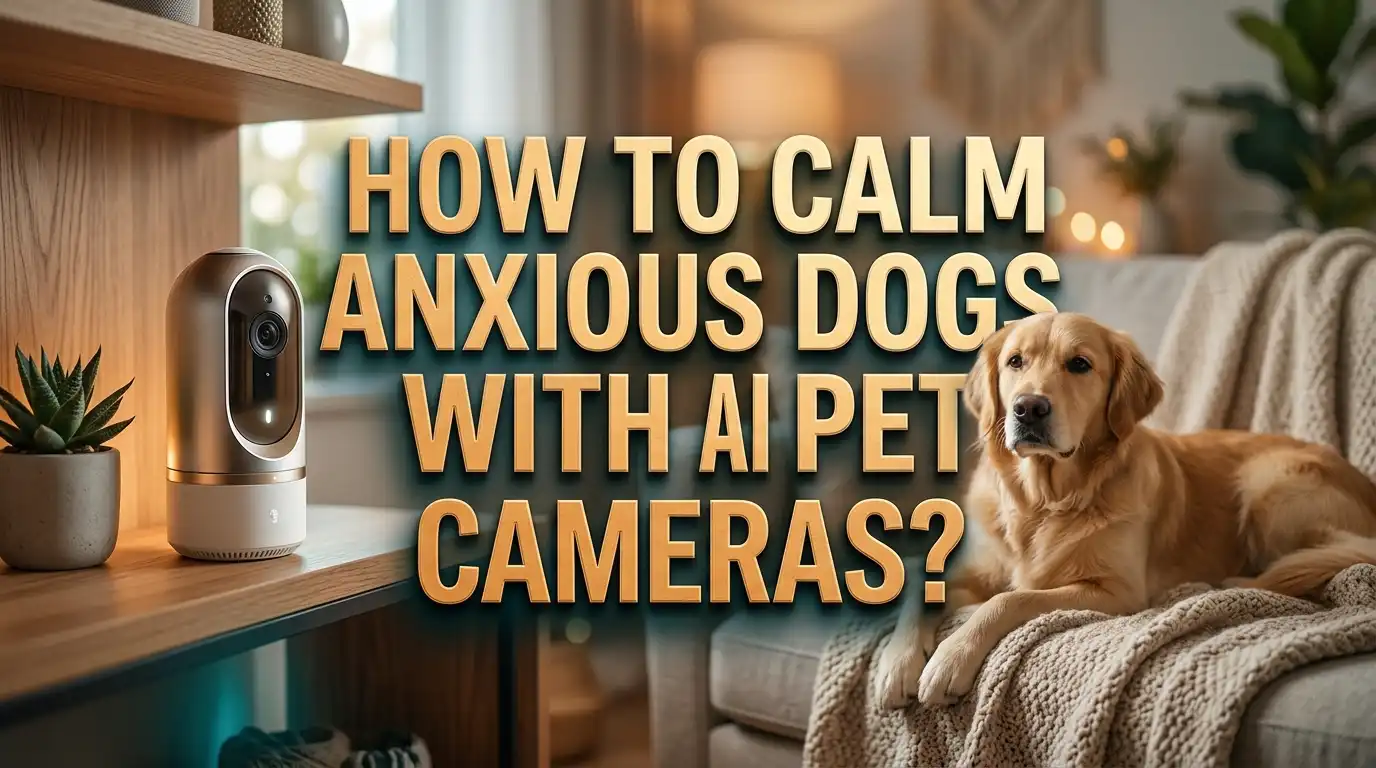
How to Calm Anxious Dogs With AI Pet Cameras?
Does your dog panic the moment you grab your keys? You are not alone. Many dogs feel real stress when left home alone.
The good news is technology can help. AI pet cameras now do more than just record video. They watch your dog’s body language and alert you to signs of stress.
But a camera alone will not fix separation anxiety. Real results come from combining smart tech with smart habits. Think calm departures, regular exercise, and positive reinforcement.
In this guide, we will show you exactly how to use AI pet cameras to soothe an anxious dog. You will learn how to set up a calming environment at home.
By the end, you will have a clear plan. You will know how to turn your camera into a real tool for your dog’s peace of mind.
In a Nutshell
AI cameras help you spot anxiety early. They alert you when your dog paces, barks, or shows stress signals.
The camera is a tool, not a fix. You still need to address the root cause of your dog’s anxiety.
Calm departures matter a lot. Skip long goodbyes and ignore your dog for 30 minutes before you leave.
Two way audio needs careful use. Talking too much through the camera can sometimes make anxiety worse.
Routine and exercise build confidence. A tired, well exercised dog handles alone time much better.
Positive reinforcement works best. Reward calm behavior instead of reacting only when your dog gets anxious.
Understanding Canine Separation Anxiety and How AI Cameras Help
Separation anxiety in dogs happens when your pet feels extreme stress or panic when you leave home. Your dog may pace, bark excessively, have accidents indoors, or destroy furniture. This behavior stems from fear, not bad manners. Dogs with separation anxiety genuinely suffer when alone.
AI cameras change how you respond to this problem. These devices use artificial intelligence to detect anxiety signals automatically. The camera watches for pacing, continuous barking, and other stress behaviors. When your dog shows these signs, you get an alert on your phone. This means you catch anxiety early, before it becomes severe.
Traditional cameras only let you watch. AI cameras do much more. They recognize specific anxiety patterns and notify you instantly. This gives you time to intervene with calming techniques before your dog spirals into panic.
Understanding the root cause matters. Your dog may have separation anxiety because of past trauma, lack of routine, or insufficient exercise. An AI camera helps you identify what triggers the anxiety. Does your dog panic right after you leave? Does anxiety build slowly over hours? The data helps you understand your pet’s specific needs.
The camera reveals your dog’s true emotional state. You see what happens when nobody is watching. Some dogs seem calm but actually pace constantly. Others bark for hours then settle down. This information guides your treatment plan.
Early detection prevents escalation. A dog showing mild anxiety today may develop severe behaviors tomorrow if left untreated. AI alerts let you start calming techniques immediately. You might play soothing music, increase exercise, or adjust your departure routine based on what the camera shows.
Remember, the camera is your information tool. It tells you what is happening. You provide the actual treatment through routine, exercise, positive reinforcement, and sometimes professional help.
Setting Up a Calm Environment Before You Leave
Before you leave your home, spend time creating an environment that naturally calms your anxious dog. This preparation is just as important as the camera itself.
Start by managing sound in your space. Play soft classical music or gentle instrumental tracks at low volume. This masks outside noises that might trigger barking or alertness. Many dogs respond well to consistent, soothing audio in the background.
Let natural light into the room where your dog stays. Close heavy curtains only if your dog shows fear of outdoor activity. Most dogs feel less anxious in bright, open spaces compared to dark, confined areas.
Exercise your dog thoroughly before departure. A tired dog has less energy to pace, whine, or panic. Take your pet for a walk or play session 1 to 2 hours before you leave. This physical activity burns nervous energy and promotes calm behavior.
Set up a safe space with familiar items. Include a comfortable bed, toys, or blankets that smell like you. Dogs find security in spaces they recognize as their own. Keep this area accessible so your dog can retreat there if needed.
Here is the critical part: ignore your dog for at least 30 minutes before you leave. No petting, talking, or eye contact. This breaks the connection between your departure and emotional reactions. Your dog learns that you leaving is normal, not a dramatic event.
Keep your actual departure calm and brief. Don’t say lengthy goodbyes or act emotional. Simply leave without fanfare. Avoid returning immediately when your dog whines, as this rewards anxious behavior.
Provide mental stimulation through puzzle toys or treat dispensers. These keep your dog’s mind busy and shift focus away from your absence. A mentally engaged dog feels less anxious overall.
These environment adjustments work together with your AI camera. The camera then monitors whether these changes actually reduce your dog’s stress signals during your time away.
Step-by-Step: Using AI Alerts to Monitor and Respond to Anxiety Signs
When your AI camera alerts you to anxiety signs, you need a clear action plan. The alert system works best when you respond thoughtfully, not frantically. Your camera sends notifications when it detects pacing, barking, whining, or other stress behaviors. This gives you real time information about what your dog experiences while alone.
Start by observing the pattern. Does anxiety spike at specific times? Does it happen right after you leave or build gradually? Your AI camera data helps you understand the trigger. Write down when alerts happen and what your dog was doing. This information guides your next steps.
Use two way audio strategically. Your camera lets you talk to your dog through a speaker. However, use this feature carefully. Brief, calm check ins can help some dogs feel reassured. Other dogs get more anxious when they hear your voice but cannot see you. Watch your dog’s response closely. If barking increases after you speak, reduce your audio interactions.
Plan your intervention timing. When you get an alert, pause before reacting. A single bark does not require immediate action. However, if your dog shows sustained pacing or distress, you might return home early or call a trusted friend to check on them. Over time, you learn which alerts signal genuine escalation versus normal restlessness.
Connect alerts to your calm environment setup. If your dog gets anxious despite exercise and routine, the alert tells you something needs adjustment. Maybe your dog needs more mental stimulation. Maybe the room temperature feels wrong. Maybe unfamiliar sounds trigger stress. Each alert is valuable feedback.
Document what works. When you notice your dog calms down after a specific action, note it. This builds your personal guide for managing your dog’s anxiety effectively.
Using Two-Way Audio Effectively Without Overdoing It
Two-way audio is a powerful feature in AI pet cameras, but using it correctly makes all the difference. The key is restraint. Your voice can comfort your dog, but it can also make anxiety worse if you use it too often.
Start by understanding what two-way audio actually does. When you speak through the camera, your dog hears your voice from an unfamiliar direction. This can surprise or confuse your pet at first. Some dogs find comfort in hearing their owner. Others get more anxious because they realize you are not physically present.
Use two-way audio only when your dog shows specific anxiety signs. If your AI camera alerts you to pacing, whining, or destructive behavior, this is the moment to consider speaking. Keep your message short and calm. Say your dog’s name in a soothing tone. Use simple words like “it’s okay” or “stay calm.”
Avoid using two-way audio as a constant check-in tool. Talking to your dog every few minutes actually teaches them that anxiety brings your attention. This reinforces the anxious behavior instead of reducing it.
Space out your audio interventions. If you speak to your dog, wait at least 20 to 30 minutes before using audio again. Let your dog learn that calm behavior is normal during your absence.
Monitor what happens after you speak. Does your dog settle down within a few minutes? Or does anxiety spike higher? This information helps you decide if two-way audio works for your specific pet.
Remember that two-way audio works best alongside other strategies. Exercise, routine, and a calm environment do the real work. The audio feature supports these efforts. It does not replace them. Your goal is helping your dog feel secure without creating dependency on your voice.
Building Long-Term Calm Through Routine, Exercise, and Positive Reinforcement
Building calm into your dog’s daily life requires consistency. Routine is the foundation that helps anxious dogs feel secure. When your dog knows what happens next, their nervous system relaxes.
Start by establishing fixed times for walks, meals, and playtime. Dogs thrive on predictability. Feed your dog at the same hour each day. Take walks at consistent times. This structure tells your dog’s brain that the world is safe and organized.
Exercise is non-negotiable for anxious dogs. A dog with pent-up energy will pace, whine, and spiral into panic. Physical activity burns stress hormones and promotes natural calm. Aim for at least one solid exercise session before you leave home. A tired dog sleeps instead of worrying.
Positive reinforcement teaches your dog that calm behavior earns rewards. When your dog lies quietly, offer praise and treats immediately. When they settle on their bed, acknowledge it. This trains their brain to associate relaxation with good things. Skip rewards during anxious moments, as this reinforces the anxiety.
Your AI camera helps you spot which routines work best. Watch the footage to see when your dog relaxes most. Does calm happen after a long walk? After a puzzle toy? After natural sunlight exposure? Use these observations to refine your daily schedule.
Consistency over weeks builds lasting change. Don’t expect results in days. Your dog’s anxiety didn’t develop overnight, and it won’t disappear overnight either. Stick with your routine for at least three to four weeks before evaluating progress.
The camera becomes your feedback tool. It shows you which combination of exercise, routine, and environmental setup actually calms your specific dog. Every dog is different. Your job is discovering your dog’s unique calm formula through patient observation and steady practice.
Common Mistakes That Undermine AI Camera Effectiveness
Many dog owners buy AI cameras expecting them to solve anxiety on their own. The camera is just a tool. It cannot fix the underlying problem by itself.
The biggest mistake is relying only on the camera without changing your dog’s environment. You might get alerts about pacing and barking, but if your dog still lacks exercise or routine, the anxiety continues. The camera shows you the problem. Your actions solve it.
Using two-way audio too much creates another common issue. Some owners talk to their dogs constantly through the speaker. Your dog learns that hearing your voice means you might come home soon or something is changing. This actually increases anxiety instead of reducing it. Less communication is often better than constant check-ins.
Emotional departures are a major mistake many people make. If you give your dog big hugs, baby talk, or sad goodbyes before leaving, you teach them that departure is a big deal. Your dog picks up on your energy. Keep your exit calm and boring. No fuss. No drama.
Inconsistent routines also undermine what your camera can do. You might use the camera perfectly one week, then skip exercise the next week because you’re busy. Anxious dogs need predictability. Skipping walks or feeding times at different hours makes anxiety worse, not better.
Another mistake is ignoring the patterns your camera shows you. The AI alerts you to anxiety signs, but you need to actually look at when and why they happen. Does anxiety spike at noon? Right after you leave? Before thunderstorms? Once you see the pattern, you can address the real cause.
Finally, many owners expect instant results. Calming an anxious dog takes weeks of consistent effort. Your camera helps you track progress, but patience is essential. Quick fixes do not work with dog anxiety.
Troubleshooting: What to Do When Anxiety Persists Despite Monitoring
When your dog’s anxiety persists despite camera monitoring, the issue usually isn’t the camera itself. The problem is often that the camera alone cannot fix deep anxiety. You need to dig deeper into what’s actually triggering your dog’s stress.
Start by looking at patterns the camera shows you. Does your dog panic right when you leave? Does anxiety build slowly throughout the day? Does it spike at certain times? These patterns tell you whether the issue is separation anxiety, boredom, lack of exercise, or something else entirely.
If anxiety continues, your dog may need professional help. A veterinary behaviorist or certified dog trainer can assess whether your dog has a medical issue or needs specialized training. Some dogs benefit from behavior modification programs that go beyond what monitoring can provide.
Check your daily routine honestly. Many dogs with persistent anxiety don’t get enough physical exercise. A tired dog is a calmer dog. If your dog only gets short walks, increase exercise gradually. Mental stimulation through puzzle toys and training sessions also reduces anxiety significantly.
Examine your departure habits too. Are you giving emotional goodbyes or hellos? Do you rush around before leaving? Dogs pick up on your stress. Keep departures and arrivals completely calm and boring.
Consider your dog’s environment when you’re gone. Is the space too quiet, too loud, or too isolated? Some dogs do better with background music, natural light, or being near a window. Others need a smaller, cozier space that feels safe.
Don’t rely on the camera to solve anxiety that needs real intervention. The camera is a monitoring tool. It shows you what’s happening. What matters is what you do with that information. Use the alerts to identify problems, then take action to address the root cause.
Final Thoughts
AI pet cameras give you a clear window into your dog’s world. You finally see what happens when you close the door and drive away.
But the camera itself does not calm your dog. It only shows you the truth about their anxiety.
Real change comes from what you do with that information. You need routines, exercise, and positive reinforcement to actually help your dog feel safe.
Think of the camera as your guide, not your solution. It points you toward patterns you would otherwise miss.
Maybe your dog panics at the sound of your car keys. Maybe they settle down after twenty minutes alone. You cannot know this without watching.
Once you spot these patterns, you can act on them. You can adjust your departure routine or add more exercise before you leave.
Small changes made consistently lead to calmer dogs over time. Your camera helps you track whether those changes actually work.
Some dogs need more than routine adjustments. If anxiety persists despite your best efforts, professional help matters.
A trainer or veterinary behaviorist can offer support your camera cannot provide. Combining expert advice with camera insights often works best.
Remember that anxious dogs need patience. Progress takes weeks, not days.
Your AI camera works best as part of a bigger plan for your dog’s wellbeing. Use it to observe, learn, and adjust your approach.
Do not expect the technology alone to fix deep anxiety issues. You are the one who creates lasting calm through consistent care.
With the right combination of monitoring and action, most dogs can learn to feel safer when left alone. Your camera simply helps you get there faster.
Frequently Asked Questions
Will talking to my dog through the camera reduce anxiety?
Talking through two-way audio can help in some situations, but it’s not a cure-all. Use it sparingly to avoid making your dog more anxious. Frequent check-ins may actually teach your dog to expect your voice, which could increase panic when you don’t respond.
Short, calm messages work better than long conversations. Keep interactions brief and positive. If your dog gets more excited or distressed when you speak, reduce how often you use this feature.
Can an AI camera actually stop destructive behavior?
No. Cameras observe and alert you to problems, but they don’t directly stop your dog from chewing or scratching. The camera shows you what’s happening, not how to fix it.
Real solutions come from addressing the root cause. If your dog destroys things from anxiety, the camera helps you spot when it happens. Then you can change your routine, add exercise, or adjust your environment based on what you learn.
How long does it take to see results from monitoring?
Results vary by dog. Some dogs improve within weeks when you make consistent changes. Others need months of steady routine and positive reinforcement.
Patience matters more than speed. The camera helps you track progress over time. You might notice your dog pacing less or resting more. Small improvements add up to real calming over time.
What should I do if my dog’s anxiety gets worse with the camera?
Your dog isn’t reacting to the camera itself. Anxiety usually worsens because of something else. Check your departure routine, exercise level, and how you leave home.
If anxiety continues despite changes, talk to a veterinary behaviorist. They can rule out medical issues and create a real treatment plan your camera cannot provide.

Hi, I’m Simmy — the founder and voice behind AI Gadgets Insight. I’m a tech enthusiast who loves exploring the latest AI gadgets, smart devices, and innovative tech products. I started this blog to help people make smarter tech choices with honest reviews, easy-to-follow comparisons, and practical buying guides.